
2026 Edition
Academic Catalog
The official academic handbook of ICOF Global University — governance, faculties, regulations and the full programme catalogue.
To save this catalog as a PDF, print the page and choose “Save as PDF”.
Part I
Welcome
Welcome from the Chancellor
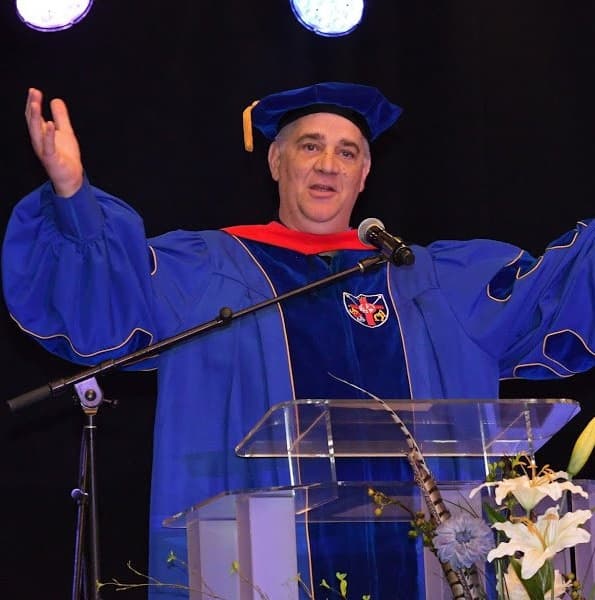
Bishop Bernie L Wade, PhD
Chancellor
Doctorates in theology, divinity, Christian education, non-profit management and pastoral counseling
Welcome to ICOF Global University. Whether you have come to this page as a prospective student weighing where to study, as a minister seeking formation, as a parent, or as a partner in the work of education, I am glad you are here.
This university exists for a plain reason. Across Africa and far beyond it, there are men and women with the calling and the capacity for higher study who have never been given the door. We were founded to open that door — to provide access to higher education that enables students to develop the knowledge and skills necessary to achieve their professional goals, to improve the performance of their organizations, and to provide leadership and service to their communities.
We are, by conviction, the Community University. That name is a commitment, not a slogan. It means our classrooms are open to the working adult and the first-generation student. It means our teaching is answerable to the communities our graduates return to serve. And it means that what is learned here is meant to be used — our purpose has always been to bridge the gap between theory and practice, so that knowledge does not stay on the page.
We are also a university of faith. ICOF Global University stands within the International Circle of Faith, whose story reaches back to the Azusa Street revival, and we hold that rigorous scholarship and formed character belong together. Integrity, diversity, excellence, collaboration, nobility, godliness, professionalism and commitment are the values we teach by and the values we expect.
Accredited by the Ministry of Higher Education continuously since 2007, we now teach from Buea and Douala, from our resource centre in Nigeria, and online to students on every continent. Wherever you study with us, you are a full member of this university.
You will be known here. You will be taught by people who have practised what they teach. And you will be sent out equipped. That is our promise to every student who enrolls.
If God has put a purpose in your hand, come and be prepared for it.
Welcome from the Vice Chancellor
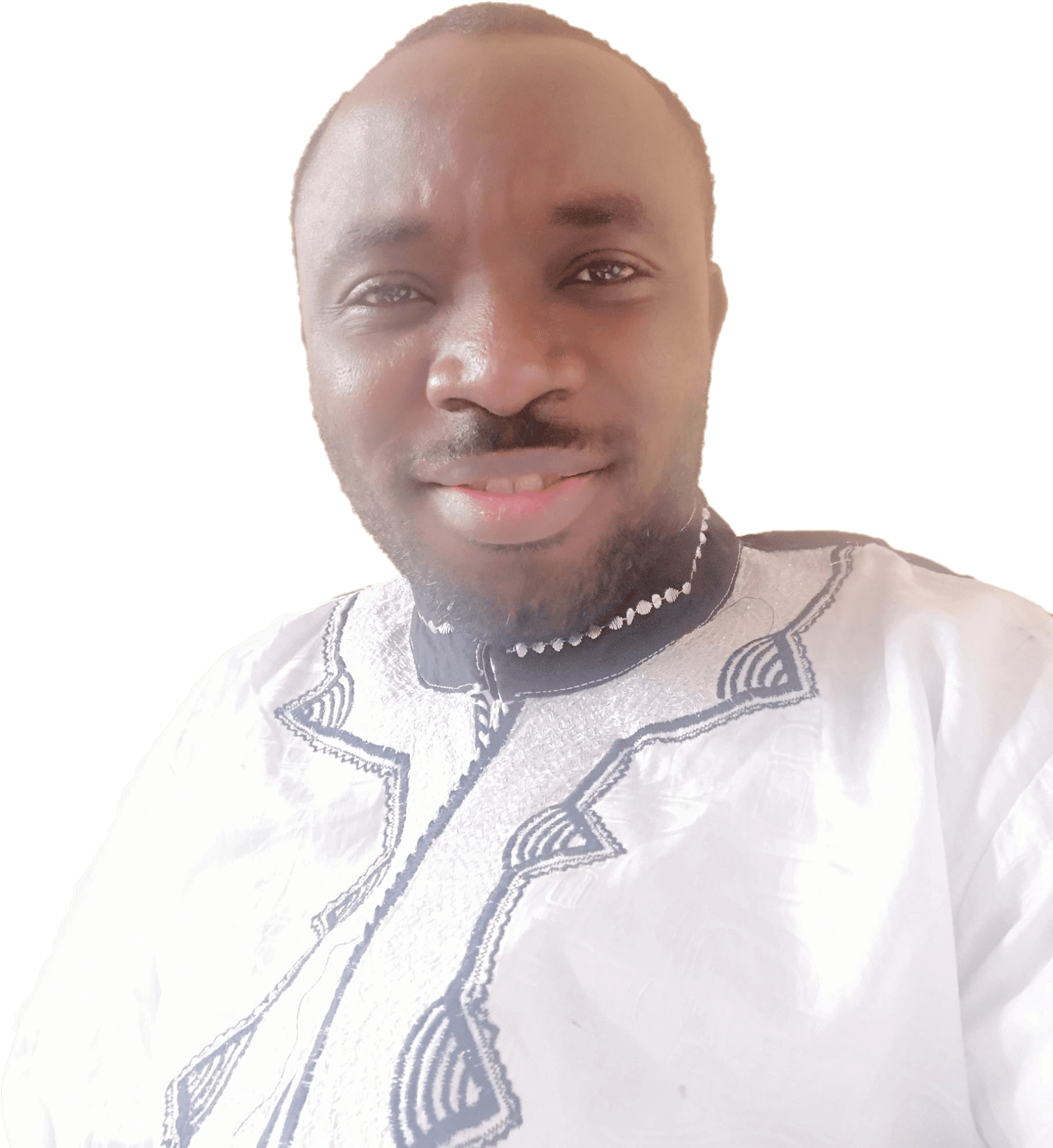
Prof Chamayah Meyembi
Vice Chancellor
The Vice Chancellor leads the academic administration of the university, supported by the Director of Academic Affairs, the Registrar and the Directors of our schools.
In preparation
The Vice Chancellor’s address
The Chancellor’s address above is published in full. The Vice Chancellor has not yet supplied an address of their own for this catalog.
Required to complete this section
- An address from the Vice Chancellor, of comparable length to the Chancellor’s
Part II
The University
History
The International Circle of Faith (ICOF) represents a contemporary movement committed to reviving and perpetuating the original apostolic message, authority, power, and anointing. With a global reach, ICOF unites ministers and ministries worldwide under a common vision of unity, prioritizing collaboration over division. Emerging from the core principles of ICOF, ICOF Global University endeavors to provide accredited education and training. Since its inception in 2007, our institution has been dedicated to nurturing professionals across various domains, championing excellence in education and service to humanity.
Our mission is to bring together anointed, kingdom-minded New Testament ministers, fulfilling the prayer of Jesus for the Church to be unified as one. Since 2007, ICOF Global University has been dedicated to nurturing professionals across various domains.
Bernie L. Wade, born on 29 June 1963 in Lakewood, Ohio, is an American minister, entrepreneur and author.
He has served in a variety of roles, including senior pastor and chief operations officer of the Christian Brotherhood — a parachurch ministry of some 28,000 families — president of the Christian World Network, and vice-president of Spread the Spirit of Love.
He is currently the Presiding Bishop of the International Circle of Faith, headquartered in Washington, D.C. Ministries within his oversight include the ICOF Colleges and Seminaries — a network of Christian bible colleges — the Christian Leadership Roundtable, and Children of Azusa Street, a network for those who trace their church history to the Azusa Street movement of 1906.
Bishop Wade holds doctorates in theology, divinity, Christian education, non-profit management and pastoral counseling, and serves as Chancellor of ICOF Global University.
Vision and Mission
ICOF Global University provides access to higher education opportunities that enable students to develop knowledge and skills necessary to achieve their professional goals, improve the performance of their organizations, and provide leadership and service to their communities.
ICOF Global University offers pathways to higher education that empower students to cultivate the knowledge and skills essential for achieving their professional aspirations — driving organizational growth and fostering leadership within their communities.
Core Values
Integrity · Diversity · Excellence · Collaboration · Nobility · Godliness · Professionalism · Commitment.
Accreditation
ICOF Global University is accredited by the Ministry of Higher Education (www.minesup.gov.cm). Since 2007, ICOF Global University has been continually accredited by the Ministry of Higher Education and its predecessor.
International Circle of Faith · accredited by the Ministry of Higher Education since 2007
Part III
Governance
The university is led by the Chancellor, with academic administration under the Vice Chancellor, supported by the Director of Academic Affairs, the Registrar and the directors of the schools. Doctoral work is examined by the Dissertation Council.
University Leadership
| Name | Office |
|---|---|
| Bishop Bernie L Wade, PhD | Chancellor |
| Prof Chamayah Meyembi | Vice Chancellor |
Administration
| Bishop Bernie L Wade, PhD | Chancellor |
| Dr. Raymond L Young | President |
| Prof Chamayah Meyembi | Vice Chancellor |
| Prof Aaron Ndenka | Director of Academic Affairs |
| Dr Bishop Tembi Alfred Tembi | Ministerial Association Presiding Bishop of Cameroon |
| Arch Bishop Prof Godfred Anyere Tah | Professor Emeritus & President of the Dissertation Council |
| Dr Divine Lyonga | Registrar |
| Rev Tchamou Nico Tonga, BTh | Head of Admission |
| Dr Samuel Kinge | Director of Exams |
| Prof Bishop Lawrence Luba | Director of School of Education |
| Rev Momfor Phillip, M.Th | Dean of Studies (Faculty of Theology) |
| Dr Bongbuen Alando | Director of School of Ministry (Douala) |
| Prof. Barnabas Oluwaleye | PPDI-RC, Nigeria |
| Prof Emmanuel Dangana | Professor of Theology |
| Dr Wake Jeo | Liberation Theology and Identity Politics |
| Prof Sunday Ayah | Theology and Criminology |
| Hoffman Betika Ayuk | Director of School of Business and Management Sciences |
| Kamgang Marcel | Director of School of Technology and Engineering |
| Forchu Venelda | Secretary |
The academic staff roster runs to 5 lecturers in addition to the officers above; see the Schools & Faculties pages.
In preparation
Statutory governance bodies
The Board of Trustees, the University Senate and the Academic Board are named in the university’s planned Statutes. Their composition, powers and reporting lines are governance instruments and take effect when the Board adopts them; they are not drafted here.
Required to complete this section
- Composition and terms of reference of the Board of Trustees
- Composition and powers of the Senate and the Academic Board
- Appointment procedures for academic office
- The delegation under which degrees are awarded
Part IV
Faculties and Schools
Faculty of Theology
Buea, Cameroon · Dean: Rev Momfor Phillip, M.Th
To develop biblically grounded, spiritually mature, academically competent and mission-oriented Christian leaders for the global Church.
School of Ministry
Buea, Cameroon · Online worldwide
To form pastors, evangelists and church leaders for the work itself — the congregation, the mission field, and the organisation that carries them.
School of Ministry, Douala
Douala, Cameroon · Campus Director: Dr Bongbuen Alando
To make ministerial formation accessible while maintaining the academic standards and spiritual formation that define ICOF Global University.
Faculty of Education
Buea, Cameroon · Dean: Prof Bishop Lawrence Luba
To produce reflective educators who inspire learning, promote innovation and contribute to sustainable educational development.
Faculty of Engineering and Technology
Buea, Cameroon · Dean: Kamgang Marcel
To develop engineers and technology professionals capable of designing, building, maintaining and improving the systems that advance industry, infrastructure and society.
Global Institute of Business and Management Science
Buea, Cameroon · Director: Hoffman Betika Ayuk
To develop ethical business leaders equipped to operate successfully within local, regional and global economies.
Part V
Academic Calendar
In preparation
Academic calendar
The university publishes individual dates — graduation, orientation and the opening of admissions — on its Events page, but has not yet adopted a full academic calendar. A catalog cannot state term dates the institution has not set.
Required to complete this section
- Semester start and end dates
- Registration and late registration windows
- Examination periods and resit periods
- Public holidays and reading weeks observed
- Graduation dates
Dates already announced are listed on the Events page.
Part VI
Admission Requirements
And we have the alumni to prove it. Join our number of working adults who had the courage to pursue their degrees and the determination to earn them. If you’re considering taking classes with us at ICOF Global University, please take a moment and glance through the admissions requirements below. Requirements may vary by college and degree level. Our team of enrollment representatives are available to walk through the entire application process with you — clarifying admissions requirements, transferring coursework and explaining the financial commitment. Fill out our free online application today.
Bachelor's Degrees
- You must have an Advanced Level (A/L) Slip or Certificate from the Cameroon General Certificate of Education Board with appropriate points and subjects depending on the degree program you chose, or hold a comparable qualification from a recognized institution abroad.
- Have a minimum of 3 points as shown on the A/L Slip or Certificate.
- Meet work experience requirements or have access to an organizational environment, depending on your selected degree program.
- Be a citizen or permanent resident of the Republic of Cameroon or hold an approved, valid visa if residing in Cameroon.
- Not have been expelled from a previous institution.
- Complete all required forms for admission and submit an official A/L Certificate or equivalent.
International students: Proof of English language.
Master's Degrees
- You must have an undergraduate degree from an approved, regionally or nationally accredited college or university, or hold a comparable degree from a recognized institution abroad.
- Have a cumulative GPA of 2.5 (on a 4.0 scale) as shown on the undergraduate degree transcript.
- Meet work experience requirements or have access to an organizational environment, depending on your selected degree program.
- Be a citizen or permanent resident of the Republic of Cameroon or hold an approved, valid visa if residing in Cameroon.
- Not have been expelled from a previous institution.
- Complete all required forms for admission and submit an official undergraduate degree posted transcript.
International students: Proof of English language.
Doctoral
- You must have a graduate degree from an approved, regionally or nationally accredited college or university, or hold a comparable degree from a recognized foreign institution.
- Have a minimum cumulative GPA of 3.0 as shown on the graduate degree transcript.
- Meet work experience requirements or have access to an organizational environment, depending on your selected degree program.
- Be a citizen or permanent resident of the Republic of Cameroon or hold an approved, valid visa if residing in Cameroon.
- Not have been expelled from a previous institution.
- Complete all required forms for admission and submit an official graduate degree posted transcript.
International students: Proof of English language.
Higher National Diploma (HND)
- You must have an Advanced Level (A/L) Slip or Certificate from the Cameroon General Certificate of Education Board with appropriate points and subjects depending on the degree program you chose, or hold a comparable qualification from a recognized institution abroad.
- Have a minimum of 3 points as shown on the A/L Slip or Certificate.
- Meet work experience requirements or have access to an organizational environment, depending on your selected degree program.
- Be a citizen or permanent resident of the Republic of Cameroon or hold an approved, valid visa if residing in Cameroon.
- Not have been expelled from a previous institution.
- Complete all required forms for admission and submit an official A/L Certificate or equivalent.
International students: Proof of English language.
Diploma (Dip)
- You must have an Advanced Level (A/L) Slip or Certificate from the Cameroon General Certificate of Education Board with appropriate points and subjects depending on the degree program you chose, or hold a comparable qualification from a recognized institution abroad.
- Have a minimum of 3 points as shown on the A/L Slip or Certificate.
- Meet work experience requirements or have access to an organizational environment, depending on your selected degree program.
- Be a citizen or permanent resident of the Republic of Cameroon or hold an approved, valid visa if residing in Cameroon.
- Not have been expelled from a previous institution.
- Complete all required forms for admission and submit an official A/L Certificate or equivalent.
International students: Proof of English language.
Certificates
- You must have an Advanced Level (A/L) Slip or Certificate from the Cameroon General Certificate of Education Board with appropriate points and subjects depending on the degree program you chose, or hold a comparable qualification from a recognized institution abroad.
- Have a minimum of 3 points as shown on the A/L Slip or Certificate.
- Meet work experience requirements or have access to an organizational environment, depending on your selected degree program.
- Be a citizen or permanent resident of the Republic of Cameroon or hold an approved, valid visa if residing in Cameroon.
- Not have been expelled from a previous institution.
- Complete all required forms for admission and submit an official A/L Certificate or equivalent.
International students: Proof of English language.
Part VII
Tuition, Fees and Scholarships
At ICOF Global University, we realize each student is unique and that includes their financial situation. We offer flexible methods to cover your tuition costs. Going to college is a big step, but you don’t have to go it alone — earning a degree shouldn’t break the bank.
| Item | Fee |
|---|---|
| Full-time tuition (per year) | $12,200 (living at home or on campus) · $12,000 (students with dependents) |
| Part-time tuition (per year) | $6,600 · $6,400 (students with dependents) |
| Books & supplies | $500 |
| Student housing (single room, toilet & kitchen) | USD 60 – 85 per month |
| Application fee | USD 100, payable with the application |
| Extension courses | Varies by program — email admissions@iguc.net |
ICOF operates two fee bands. Students from Africa and the Global South pay a subsidised rate, funded as scholarship — the university carries the difference so that cost is not what keeps a called student out of higher education. Students from Europe and North America pay a higher rate, set at approximately European levels and slightly below them; those fees help fund the scholarship band. Which band applies is determined by nationality and residence, not by mode of study.
We provide financial aid through scholarships — follow our announcements and newsletters to know when a scholarship program is published. Every programme is available on campus in Buea and Douala, online, or as a combination of the two.
Scholarships and Financial Aid
We realize each student is unique — and that includes their financial situation. Alongside flexible payment methods for tuition, the university provides financial aid through scholarship programs announced during the academic year.
Scholarship programs are published on this website and through our social media and newsletters. Awards consider academic merit and financial need. Follow our announcements, or subscribe to updates through the contact page, to know when a scholarship window opens.
Many bright students called to theological education are hindered by financial constraints. Our comprehensive ministry scholarship program, funded by donors, supports biblical and theological training for those preparing for service. Prospective beneficiaries should write to admissions@iguc.net; donors can give through our Support IGUC initiative.
Through our charity arm, sponsorship extends to elementary education for children and individuals willing but not able to pursue their dreams — because access to education is part of our mission at every level.
Tuition can be paid full-time or part-time, with mobile money, bank transfer and cash accepted at the bursary. See Cost & Tuition for the current schedule, or contact the student support office for a personal plan.
Withdrawal and refunds
Refunds are calculated from the date of enrolment. A Withdrawal Form must be submitted and clearance granted; a student who leaves without one remains liable for the whole semester’s fees.
| Withdrawal within | Refund |
|---|---|
| Within 7 days of initial enrolment | 100% |
| After 7 days and within 14 days | 75% |
| After 14 days and within 30 days | 50% |
| After 30 days and within 90 days | 25% |
| After 90 days | None |
Terms of payment, the charges payable in addition to tuition and the terms for sponsors are set out in full in the Academic Regulations.
Part VIII
Student and Examination Regulations
Code of Conduct
The Code of Conduct at ICOF Global University delineates the expected behaviors and standards for all members of the university community, including students, faculty, and staff:
- Academic Integrity: upholding honesty in all academic endeavors, prohibiting plagiarism, cheating, and other forms of academic dishonesty.
- Respectful Behavior: promoting mutual respect among community members, prohibiting harassment, bullying, and any form of discriminatory behavior.
- Non-Discrimination: ensuring an inclusive environment free from discrimination based on race, gender, sexual orientation, religion, disability, or any other protected characteristic.
- Compliance with Laws and Regulations: adhering to local, state, and federal laws, as well as university-specific regulations.
Disciplinary Process
- Investigation: a thorough investigation is conducted to gather all relevant information and evidence.
- Assessment: the gathered evidence is assessed to determine whether a violation has occurred and the severity of the infraction.
- Decision: based on the findings, a decision is made regarding the appropriate disciplinary action, communicated with its rationale.
- Right to Appeal: the parties involved have the right to appeal the decision before an independent panel.
Due Process and Appeals
ICOF Global University is committed to upholding the principles of due process in all disciplinary proceedings: the right to be heard, the right to present evidence, and the right to appeal. Our commitment to transparency, fairness, and accountability is unwavering.
Grading scale
The pass mark is 65%. Grade points run in one-third steps from 4.00 and the scale has no 3.67 point; it is the university’s own and should be read as printed rather than mapped onto the more common four-point scale.
| Grade | Descriptor | Percentage | Points |
|---|---|---|---|
| A | Excellent | 93–100% | 4.00 |
| A- | Very Good | 90–92% | 3.70 |
| B+ | Good | 87–89% | 3.30 |
| B | Above Average | 83–86% | 3.00 |
| B- | Average | 80–82% | 2.70 |
| C+ | Satisfactory | 77–79% | 2.30 |
| C | Satisfactory | 73–76% | 2.00 |
| C- | Below Satisfactory | 70–72% | 1.70 |
| D+ | Pass | 67–69% | 1.30 |
| D | Pass | 65–66% | 1.00 |
| F | Fail | 0–64% | 0.00 |
Special grades. W — Withdrawal; WA — Withdrawal with Approval; WC — Withdrawal with Course; I — Incomplete; NG — No Grade; NC — No Credit.
The Grade Point Average is calculated by dividing the total grade points earned by the total credit hours attempted. It is reported for a semester and cumulatively for the whole programme.
Study load by level
- Certificate. Minimum 10 and maximum 12 subjects per year.
- Ordinary Diploma. Minimum 10 and maximum 12 subjects per year.
- Bachelor’s Degree (distance learning). Minimum 10 and maximum 12 subjects per year.
- Bachelor’s Honours Degree (distance learning). One full academic year, to a maximum of eight subjects.
- Master’s Degree. Coursework and dissertation combined; a small number of degrees may be taken by thesis only.
- Doctorate and Ph.D.. Mostly by dissertation, with the exception of a few doctorates in the business sciences.
The complete regulations — assessment weightings, fees, sponsorship and refunds — are published at Academic Regulations.
In preparation
Examination regulations, graduation requirements and degree classifications
The grading scale above is adopted and published. What is still missing is the machinery around it: how a student enters an examination, what happens when they miss one, and what final GPA earns which class of award. All three are instruments the Academic Board adopts, and nothing is stated here in their place.
Required to complete this section
- Examination entry conditions and registration deadlines
- Conduct of examinations, and the definition and penalties of misconduct
- Absence, deferral, resit and repeat rules, and when a supplementary examination is granted
- Degree classification bands and their names
- Credit minimum and residency requirement for each award
- Appeal route against an examination board decision
Part IX
Academic Integrity and Research Ethics
Academic integrity is the first obligation in the university’s Code of Conduct: honesty in all academic endeavours, with plagiarism, cheating and other forms of academic dishonesty prohibited. The disciplinary process above applies to breaches.
In preparation
Research ethics, plagiarism procedure and the use of generative AI
A prohibition on plagiarism is not the same as a procedure for detecting, hearing and penalising it, and the university has no published position on the use of generative AI in assessed work — a question every student now faces.
Required to complete this section
- Research ethics approval route, and the committee that grants it
- Plagiarism detection and the hearing procedure that follows a report
- The university’s position on generative AI in assessed work
- Required citation standard, by faculty
- Intellectual property in student and staff work
Part X
Student Services
Students have access to the student portal for registration, results, transcripts and certificates; to the learning management system for course materials, assignments and online examinations; and to credential verification for employers. Campus life, support services and facilities are described on the Campus Life page.
In preparation
Library and ICT services
A catalog is expected to describe the library a student may use and the ICT services provided. The university has not supplied either.
Required to complete this section
- Library holdings, opening hours and any electronic subscriptions
- What ICT provision a registered student receives — accounts, storage, software, support hours
- Whether a research repository exists for theses
- Disability and learning support provision
Part XI
Quality Assurance
The university has been accredited by the Ministry of Higher Education continuously since 2007. Doctoral work is examined by the Dissertation Council.
In preparation
Quality assurance framework
Accreditation by the Ministry is a fact the university can state. A quality assurance framework — how standards are set, monitored and improved — is a separate thing, and is the document an accreditation body reads most closely. It is planned as a manual in its own right.
Required to complete this section
- Programme approval route and who signs it off
- Course and curriculum review cycles
- Whether external examiners are appointed, and their terms of reference
- Assessment moderation procedure
- Student and lecturer evaluation instruments
- Graduate attributes the university claims for its awards
Part XII
Programmes and Course Descriptions
The university offers 24 programmes across 5 faculties and 48 courses. Programmes are listed by faculty and by level of award.
Faculty of Theology
Certificate
Certificate of Theology
The first rung of theological study: a foundational survey of the Scriptures, of Christian belief and of the practice of ministry, for lay leaders, church workers and anyone beginning ministerial training. No prior theological study is assumed.
Outcomes: Old and New Testament survey · Foundations of Christian doctrine · Introduction to church history · Basic ministry practice
Certificate of Christian Education
Introductory training for those who teach within the local church — Sunday school teachers, youth workers, small-group leaders and church educators — combining biblical foundations with practical teaching method.
Outcomes: Teaching the Bible to all ages · Lesson planning and delivery · Discipleship and formation · Safeguarding and pastoral care of learners
Diploma
Diploma in Theology
A condensed theological education giving a solid grounding in key theological concepts, biblical interpretation, church history and practical ministry skills — for personal enrichment, for ministry preparation, or as a foundation for further theological study.
Outcomes: Biblical interpretation · Church history · Practical ministry skills · Foundation for the B.Th.
Bachelor
Bachelor of Divinity
The theological route to ordained ministry. Divinity is the more academically weighted of the two ministry bachelors: biblical languages, exegesis and systematic doctrine are studied in depth, and the degree is the natural preparation for the Master of Divinity and for further scholarship.
Outcomes: Biblical languages and exegesis · Systematic theology · Homiletics · Preparation for ordination
Bachelor of Theology
A three-year, 180-ECTS undergraduate degree combining rigorous academic study with spiritual formation and practical ministry, available full-time, part-time, online and by distance learning.
Outcomes: Biblical interpretation · Christian doctrine · Church history · Pastoral ministry
Bachelor of Christian Education
Teaching and discipleship within the local church, taken to degree level: curriculum design for every age group, the theology of formation, and supervised teaching practice in a church setting.
Outcomes: Christian curriculum design · Teaching across the age range · Theology of discipleship · Supervised teaching practice
Master
Master of Theology
An advanced theological degree emphasising African and Black Hebrew theology, contextual theology and ecotheology, feminist and queer theologies, and disability theology, completed with a thesis.
Outcomes: Contextual theology · African Christian history · Research methodologies · Thesis
Master of Divinity
The comprehensive professional degree for ordained ministry — preaching, pastoral care, liturgy, church administration and practical theology, built on the doctrinal and biblical foundation of the Bachelor of Divinity or the Bachelor of Theology.
Outcomes: Homiletics and worship · Pastoral theology and care · Church administration · Ministerial ethics
Master of Arts in Black Liberation Theology
A theology for the liberation of all humanity. Pioneered at ICOF Global University as an academic discipline, integrating biblical revelation, history, archaeology, anthropology, culture and social justice.
Outcomes: Biblical interpretation in African context · Historical and archaeological method · Theology, justice and reconciliation · Original research and dissertation
Doctorate
Doctor of Philosophy (Ph.D.) in Theology
The university’s research doctorate. Candidates produce an original contribution to theological scholarship under supervision, examined by the Dissertation Council and defended orally.
Outcomes: Advanced research methods · Original contribution to knowledge · Dissertation and oral defence · Academic publishing
Doctor of Theology
Advanced doctrinal scholarship for those who teach and lead within the church. The D.Th. is weighted toward systematic and biblical theology rather than toward research method for its own sake, and is examined by dissertation.
Outcomes: Advanced systematic theology · Biblical theology and exegesis · Theological teaching · Dissertation
Doctor of Systematic Theology
A specialised doctorate in the foundational doctrines of the Christian faith — their historical development, theological implications and contemporary relevance. Where the D.Th. ranges across the discipline, the DSTh stays within systematics: God, Christ, Spirit, humanity, salvation and last things.
Outcomes: Trinitarian theology · Christology and soteriology · Theological method and hermeneutics · Dissertation in systematic theology
Course codes
| THE-BA | Bachelor of Theology | Bachelor |
| BDIV | Bachelor of Divinity | Bachelor |
| BMIN | Bachelor of Ministry | Bachelor |
| CED-BA | Bachelor of Christian Education | Bachelor |
| THE-MA | Master of Theology | Master |
| DIV-MA | Master of Divinity | Master |
| EVM-MA | Masters in Evangelism and Mission | Master |
| MACL | Master of Arts in Christian Leadership | Master |
| BLT-MA | Master of Arts in Black Liberation Theology | Master |
| PHD-TH | Doctor of Philosophy (Theology) | Doctorate |
| DSTH | Doctor of Systematic Theology | Doctorate |
| DTH | Doctor of Theology | Doctorate |
| DMIN | Doctor of Ministry | Doctorate |
| CERT-TH | Certificate of Theology | Certificate |
| CERT-CE | Certificate of Christian Education | Certificate |
| DIP-TH | Diploma in Theology | Diploma |
| DIP-MIN | Diploma in Ministry | Diploma |
| DIP-CL | Diploma in Christian Leadership | Diploma |
School of Ministry
Diploma
Diploma in Ministry
Practical ministerial formation at diploma level for those already serving in local churches — preaching, pastoral care, church administration and evangelism — leading on to the Bachelor of Ministry or the Bachelor of Theology.
Outcomes: Preaching and teaching · Pastoral care · Church administration · Evangelism and mission
Diploma in Christian Leadership
Leadership formation for those carrying responsibility in churches, ministries and Christian organisations. Where the Diploma in Ministry forms the pastor, this diploma forms the leader — governance, stewardship, team building and the handling of conflict, grounded in a biblical understanding of servant leadership.
Outcomes: Servant leadership and character · Governance and accountability · Team building and delegation · Stewardship, conflict and change
Bachelor
Bachelor of Ministry
The practical route to ministry, and a distinct award from the Bachelor of Divinity. The B.Min. is built for those already serving: supervised placement runs throughout, and the emphasis falls on preaching, pastoral care, discipleship, church administration and mission rather than on the biblical languages.
Outcomes: Preaching and worship leading · Pastoral care and counselling · Church administration and finance · Supervised ministry placement
Master
Masters in Evangelism and Mission
Missiology and the practice of evangelism for those sent to plant, to cross cultures and to reach communities that the church has not yet reached — with particular attention to mission within and from Africa.
Outcomes: Missiology and mission history · Cross-cultural communication · Church planting · Contemporary evangelism
Master of Arts in Christian Leadership
Advanced leadership study for those directing churches, denominations, Christian organisations and NGOs. The degree treats leadership itself as the object of study — organisational strategy, change, governance and ethics — and concludes with a supervised leadership research project.
Outcomes: Organisational strategy and change · Governance and financial stewardship · Leadership ethics and supervision · Leadership research project
Doctorate
Doctor of Ministry
The professional doctorate for practising ministers, in Christian Counseling and Administration. Study is grounded in the candidate’s own ministry context, and the final project addresses a problem in that context rather than a question in the literature alone.
Outcomes: Christian counselling · Church and organisational administration · Reflective ministry practice · Applied doctoral project
Faculty of Education
Bachelor
Primary Education
Prepares classroom-ready teachers with modern pedagogy, curriculum design and supervised teaching practice.
Outcomes: Pedagogy · Curriculum design · Classroom management · Assessment
Special Education
Equips educators to serve learners with diverse needs through inclusive teaching strategies and intervention design.
Outcomes: Inclusive education · Learning assessment · Intervention planning · Family engagement
Course codes
| EDU-PRI | Primary Education | Bachelor |
| EDU-SPE | Special Education | Bachelor |
Faculty of Engineering and Technology
Diploma
Computer Networking
Practical computer networking — infrastructure, administration and security for modern organisations. Related tracks include Hardware Maintenance, Laptop Chipsets and Air Conditioning & Refrigeration.
Outcomes: Network infrastructure · System administration · Network security · Hardware maintenance
Bachelor
Software Engineering
From programming foundations to full-stack development and software project delivery, with hands-on labs throughout. Related tracks include Webmaster, Oracle Database and Computerized Accounting.
Outcomes: Programming · Databases · Web & mobile development · Software project delivery
Course codes
| SWE | Software Engineering | Bachelor |
| NET | Computer Networking | Diploma |
| WEB | Webmaster | Diploma |
| ORA | Oracle Database | Certificate |
| HWM | Hardware Maintenance | Certificate |
| LCH | Laptop Chipsets | Certificate |
| ACR | Air Conditioning & Refrigeration | Certificate |
| CAC | Computerized Accounting | Diploma |
Global Institute of Business and Management Science
Bachelor
Business Management
Core management disciplines — Business Management, Non-Profit Management, Banking and Finance, Accountancy, Insurance and Secretarial Studies — with an entrepreneurial edge.
Outcomes: Management · Banking & finance · Accountancy · Marketing
Master
Project Management
Professional project delivery: planning, budgeting, risk and stakeholder management aligned to international standards.
Outcomes: Project planning · Risk management · Budgeting · Leadership
Course codes
| BUS-MGT | Business Management | Bachelor |
| PRJ-MGT | Project Management | Master |
| NPM | Non-Profit Management | Bachelor |
| BNF | Banking and Finance | Bachelor |
| ACC | Accountancy | Bachelor |
| INS | Insurance Policy | Diploma |
| SEC-EX | Executive Secretarial Duties | Diploma |
| SEC-BI | Bilingual Secretarial Duties | Diploma |
In preparation
Course descriptions with credit values
Course lists with the university’s own codes are now published for 2 programmes, and assessment weightings apply across all of them. What is still missing is a credit value against every course, and the reconciliation of the two incompatible B.Th. structures the university has supplied.
Required to complete this section
- Credit values for the Diploma of Theology, whose fifteen courses are published without them
- Year Three of the Bachelor of Theology credit-hour structure
- Which structure governs the B.Th. award — 180 ECTS or the credit-hour scheme
- Course lists for the remaining awards
- Prerequisites and co-requisites
ICOF Global University · Academic Catalog, 2026 Edition · Opposite Bulu Blind Junction, Buea-Cameroon · info@iguc.net
Sections marked “In preparation” are pending adoption by the university’s academic bodies. This catalog is generated from the university’s published records and updates with them.