
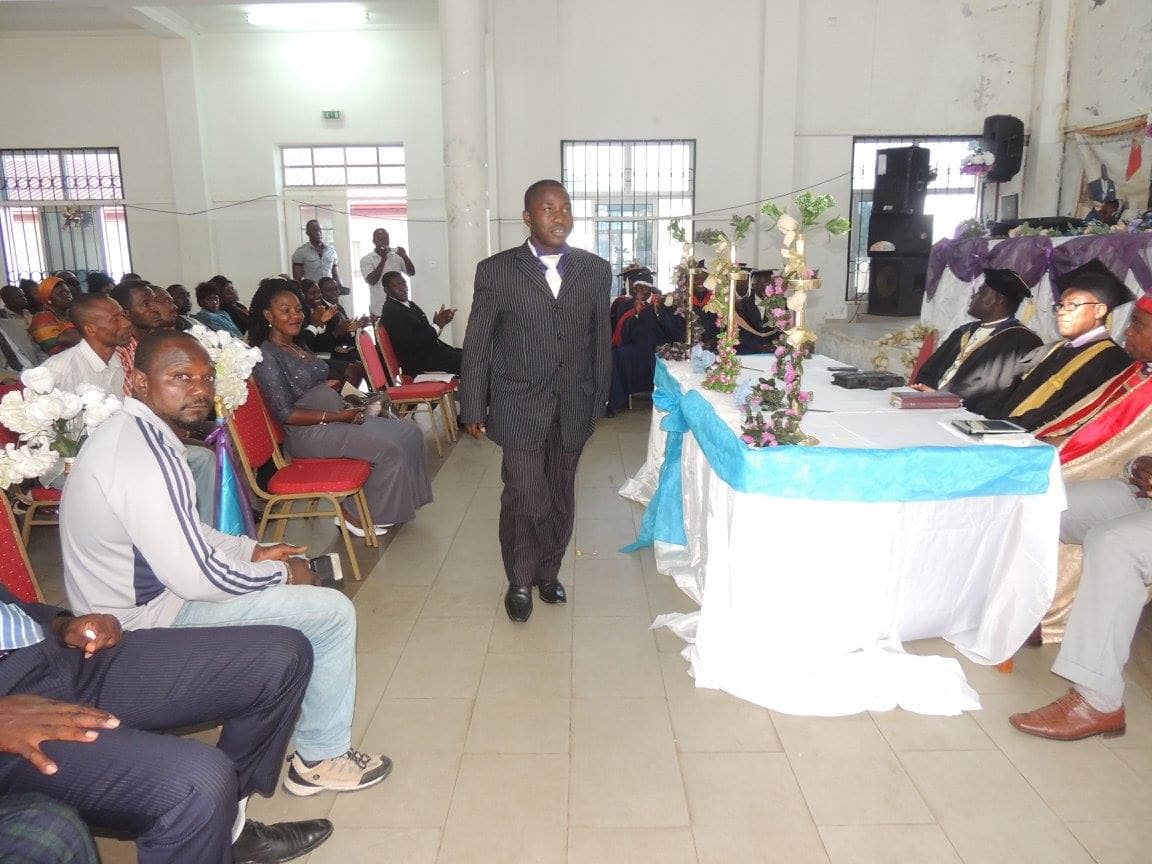
Douala, Cameroon
Theology, Douala Faculty Handbook
For students of the School of Theology, Douala — programmes, assessment, research expectations and graduation.
Part I
Dean’s Welcome
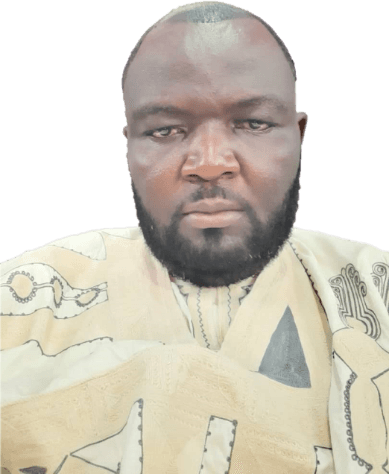
Dr Bongbuen Alando
Campus Director · Theology, Douala
The School of Theology at the Douala Campus extends the mission of ICOF Global University by providing quality theological education to students within Douala and surrounding regions.
The campus delivers the same academic standards, curriculum, assessments, and qualifications as the Buea campus while providing accessible education within a dynamic urban environment.
We are committed to preparing ministers, church leaders, educators, and missionaries who will faithfully serve the Church and society.
Part II
About the Faculty
The School of Theology in Douala teaches the Faculty of Theology’s programmes in Cameroon’s largest city and commercial centre, for students who cannot relocate to Buea.
The two campuses share their materials. A student in Douala studies the same courses, sits the same assessments and receives the same award as a student in Buea; only the location differs.
The Douala campus operates under the direction of Dr Bongbuen Alando.
In preparation
Faculty history and academic calendar
A faculty handbook normally opens with the faculty's own history and the year's dates. Neither has been supplied.
- When the faculty was founded, and by whom
- Milestones a student would want to know
- Semester dates, registration windows and examination periods for this faculty
Part III
Programmes
The faculty awards 12 programmes across 5 levels.
Certificate
- Certificate of Theology
The first rung of theological study: a foundational survey of the Scriptures, of Christian belief and of the practice of ministry, for lay leaders, church workers and anyone beginning ministerial training. No prior theological study is assumed.
- Certificate of Christian Education
Introductory training for those who teach within the local church — Sunday school teachers, youth workers, small-group leaders and church educators — combining biblical foundations with practical teaching method.
Diploma
- Diploma in Theology
A condensed theological education giving a solid grounding in key theological concepts, biblical interpretation, church history and practical ministry skills — for personal enrichment, for ministry preparation, or as a foundation for further theological study.
Bachelor
- Bachelor of Divinity
The theological route to ordained ministry. Divinity is the more academically weighted of the two ministry bachelors: biblical languages, exegesis and systematic doctrine are studied in depth, and the degree is the natural preparation for the Master of Divinity and for further scholarship.
- Bachelor of Theology
A three-year, 180-ECTS undergraduate degree combining rigorous academic study with spiritual formation and practical ministry, available full-time, part-time, online and by distance learning.
- Bachelor of Christian Education
Teaching and discipleship within the local church, taken to degree level: curriculum design for every age group, the theology of formation, and supervised teaching practice in a church setting.
Master
- Master of Theology
An advanced theological degree emphasising African and Black Hebrew theology, contextual theology and ecotheology, feminist and queer theologies, and disability theology, completed with a thesis.
- Master of Divinity
The comprehensive professional degree for ordained ministry — preaching, pastoral care, liturgy, church administration and practical theology, built on the doctrinal and biblical foundation of the Bachelor of Divinity or the Bachelor of Theology.
- Master of Arts in Black Liberation Theology
A theology for the liberation of all humanity. Pioneered at ICOF Global University as an academic discipline, integrating biblical revelation, history, archaeology, anthropology, culture and social justice.
Doctorate
- Doctor of Philosophy (Ph.D.) in Theology
The university’s research doctorate. Candidates produce an original contribution to theological scholarship under supervision, examined by the Dissertation Council and defended orally.
- Doctor of Theology
Advanced doctrinal scholarship for those who teach and lead within the church. The D.Th. is weighted toward systematic and biblical theology rather than toward research method for its own sake, and is examined by dissertation.
- Doctor of Systematic Theology
A specialised doctorate in the foundational doctrines of the Christian faith — their historical development, theological implications and contemporary relevance. Where the D.Th. ranges across the discipline, the DSTh stays within systematics: God, Christ, Spirit, humanity, salvation and last things.
Study load
- Certificate. Minimum 10 and maximum 12 subjects per year.
- Ordinary Diploma. Minimum 10 and maximum 12 subjects per year.
- Bachelor’s Degree (distance learning). Minimum 10 and maximum 12 subjects per year.
- Bachelor’s Honours Degree (distance learning). One full academic year, to a maximum of eight subjects.
- Master’s Degree. Coursework and dissertation combined; a small number of degrees may be taken by thesis only.
- Doctorate and Ph.D.. Mostly by dissertation, with the exception of a few doctorates in the business sciences.
Part IV
Course Descriptions
Full course lists with the faculty’s own codes are published for 2 programmes.
- Diploma of Theology — 1 year, 15 courses
- Bachelor of Theology — supplementary course schedule — Three years, 30 courses
Course catalogue (18)
| THE-BA | Bachelor of Theology | Bachelor |
| BDIV | Bachelor of Divinity | Bachelor |
| BMIN | Bachelor of Ministry | Bachelor |
| CED-BA | Bachelor of Christian Education | Bachelor |
| THE-MA | Master of Theology | Master |
| DIV-MA | Master of Divinity | Master |
| EVM-MA | Masters in Evangelism and Mission | Master |
| MACL | Master of Arts in Christian Leadership | Master |
| BLT-MA | Master of Arts in Black Liberation Theology | Master |
| PHD-TH | Doctor of Philosophy (Theology) | Doctorate |
| DSTH | Doctor of Systematic Theology | Doctorate |
| DTH | Doctor of Theology | Doctorate |
| DMIN | Doctor of Ministry | Doctorate |
| CERT-TH | Certificate of Theology | Certificate |
| CERT-CE | Certificate of Christian Education | Certificate |
| DIP-TH | Diploma in Theology | Diploma |
| DIP-MIN | Diploma in Ministry | Diploma |
| DIP-CL | Diploma in Christian Leadership | Diploma |
Part V
Assessment and Grading
The pass mark is 65%, and grades run from A at 94–100% to F. The full scale with grade points is in the Academic Regulations.
Diploma and undergraduate courses
| Participation — engagement in class discussion and activities | 20% |
| Assignments — written assignments and projects | 30% |
| Examinations — midterm and final | 30% |
| Presentations — preparation and delivery of oral presentations | 20% |
Master’s courses
| Participation — class discussion and online forums | 20% |
| Research paper — 5,000 words | 30% |
| Presentations | 20% |
| Final examination — comprehensive, covering all modules | 30% |
Part VI
Practicum, Ministry and Chapel
Theological formation at ICOF is not confined to the lecture room. Students take part in chapel services, prayer retreats, community outreach, mission internships, leadership conferences, student theological societies, research seminars, ministry practicums and community service.
The Bachelor of Ministry carries supervised placement throughout, and the Bachelor of Theology includes internships, practicums and service-learning.
In preparation
Practicum, ministry and chapel requirements
What a student must actually do to satisfy these — and whether chapel attendance is compulsory — has not been set. This is the one section of a theology faculty handbook a student is most likely to be assessed against, so nothing is stated in its place.
- Practicum hours required by award, and over what period
- How a placement is approved, who supervises it and how it is assessed
- Ministry requirements — what a student must do outside class to qualify
- Whether chapel attendance is compulsory, how often, and how it is recorded
- Whether any of the above carries credit
Part VII
Research Expectations
Research in this faculty concentrates on 8 areas. Students are encouraged to pursue research contributing both to academic scholarship and to practical service.
- Urban Mission
- Church Leadership
- African Christianity
- Contextual Theology
- Pentecostal Studies
- Community Development
- Youth Ministry
- Church Planting
Research degree candidates should read the Graduate School Handbook, which sets out admission, comprehensive examinations, research methodologies and the dissertation.
Part VIII
Graduation Requirements
A graduating student with outstanding fees will have a hold placed on transcripts, diplomas and degrees until those fees are paid in full.
Doctoral candidates complete all required coursework, pass comprehensive examinations, and defend the dissertation before a faculty committee.
In preparation
Credit totals, GPA minimum and classification
The requirements to graduate from each award in this faculty have not been adopted.
- Credit total required for each award
- Minimum cumulative GPA to graduate
- Residency requirement — how much must be taken at ICOF
- Degree classification bands and their names
Part IX
Contact
School of Theology, Douala
Douala, Cameroon · Campus Director: Dr Bongbuen Alando
Opposite Bulu Blind Junction, Buea-Cameroon
+237 675 133 426 · info@iguc.net
ICOF Global University · School of Theology, Douala Handbook · Sections marked “In preparation” are pending adoption.